
Blog · 2 March 2026
The Wedding Fireworks Planning Checklist: What to Do, Month by Month
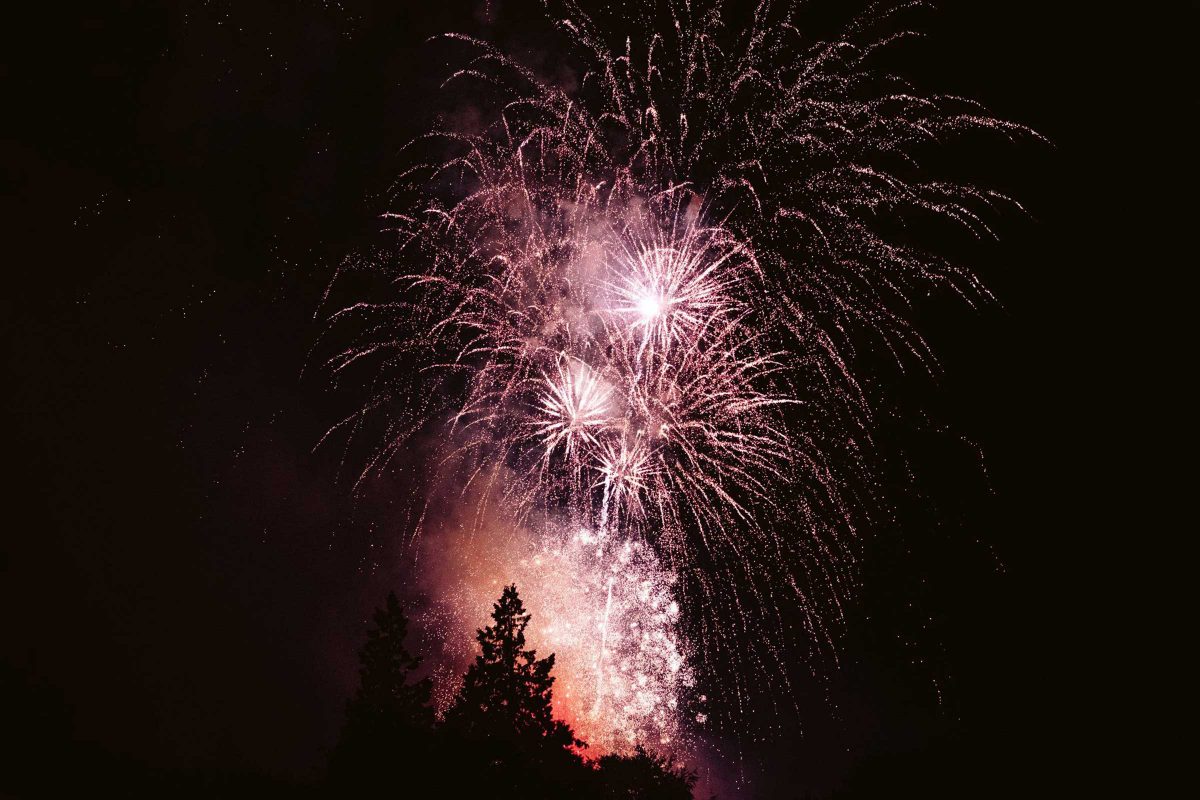
Fireworks are one of the easier parts of a wedding to organise, because a professional company does almost all of the work. They do reward couples who start early, though. Popular dates disappear first, venues need time to say yes, and a few details like sunset and curfews shape when your display can actually happen. Here's the full timeline, from a year out to the moment the first shell goes up.
12 months out: ask your venue one question
Before you book anything, ask your venue: 'Do you allow professional firework displays, and is there anything we should know?' Most venues that host evening receptions will say yes, especially for a fully insured, professionally fired display. Some will have conditions, perhaps a curfew, a preferred firing area, or a request for low-noise fireworks, and it's far easier to design around those from the start than to discover them later.
If your venue hesitates, don't panic and don't cross fireworks off the list. A professional company can usually speak to the venue directly, share their risk assessment and insurance, and turn a cautious 'maybe' into a confident 'yes'.
9 to 10 months out: book your display company
Peak summer Saturdays, bank holiday weekends and New Year's Eve book up earliest. A professional crew can only be in one place per evening, so the best dates do go first. Booking early also gets you the pick of the diary for your site survey.
- ✦Compare like for like: check every quote includes a risk assessment, site survey, insurance, crew and clean-up as standard.
- ✦Ask how the display is fired. Computer firing is the mark of a modern professional show, with every cue landing precisely on time.
- ✦Read reviews from real couples as well as the company's own website.
6 months out: design the display around your day
This is the fun part. Decide whether you want a classic display or a pyromusical set to music. If it's a pyromusical, choose your track now so there's plenty of time to choreograph it. Think about colour themes to match your styling, heart-shaped bursts, and whether you'd like to fire the opening shot yourselves by wireless remote. Your display company will also complete their site survey around this stage if they haven't already, confirming firing positions and safety distances (professional displays keep fireworks a minimum of 50 metres from your guests).
3 months out: sort the paperwork
Couples worry far more about licensing than they need to. You do not generally need any special licence for a professional firework display at a private wedding. What venues actually want is proof of public liability insurance and a written risk assessment, and a professional company supplies both as a matter of course. If anyone tells you that you must personally obtain council permission for a standard private display, that's typically a myth. The legal boundary that does matter is timing: UK law restricts how late fireworks can be set off, which is one reason displays finish well before midnight.
- ✦Confirm your venue has received the insurance certificate and risk assessment.
- ✦Agree the firing time in writing with the venue. Most impose a curfew of 10pm to 11pm.
- ✦Check your venue's own event insurance doesn't need notifying. Most don't, but two minutes now saves a headache later.
1 month out: tell the neighbours
A short, friendly note to nearby homes and farms, giving the date, approximate firing time and rough duration, transforms how a display is received. Neighbours who know it's coming can plan around it and keep pets indoors; neighbours who are surprised at 10pm tend to complain. Many venues will handle this themselves because they know their neighbours, but ask rather than assume. If livestock or stables are close by, mention it to your display company: low-noise fireworks exist for exactly this reason and still look spectacular.
The final week: timing, weather and the wedding day itself
Your display needs darkness, so timing revolves around sunset. In midsummer that can mean firing close to the curfew; in spring, autumn and winter you have far more flexibility, and an earlier display can sit beautifully between dinner and dancing. Your display company will recommend the sweet spot for your date.
Most couples also ask about rain, and the answer surprises them: fireworks fire perfectly well in wet weather. Professional equipment is set up and protected for wet conditions, and a rainy-night display looks every bit as glorious from under an umbrella or a doorway. The only weather that stops a show is extreme wind, because safety distances can no longer be guaranteed. Even then, a professional crew makes that call with you on the night, not days in advance based on a pessimistic forecast.
Rain doesn't stop a firework display. Strong wind occasionally postpones one, and that decision is made with you on the night.
On the day itself, you have one job: be standing somewhere with a good view when the lights go down. The crew arrives hours ahead, rigs, fires, clears the site and leaves. All you have to do is enjoy the applause.
To put a date in the diary, get in touch with your venue name and wedding date and we'll check availability and send a quote the same week. With over 25 years of experience across the Thames Valley and Home Counties, Amazing Wedding Fireworks, the wedding arm of award-winning Sonning Fireworks, will handle every step on this wedding fireworks planning checklist for you.